

About the Damascus Dossier investigation
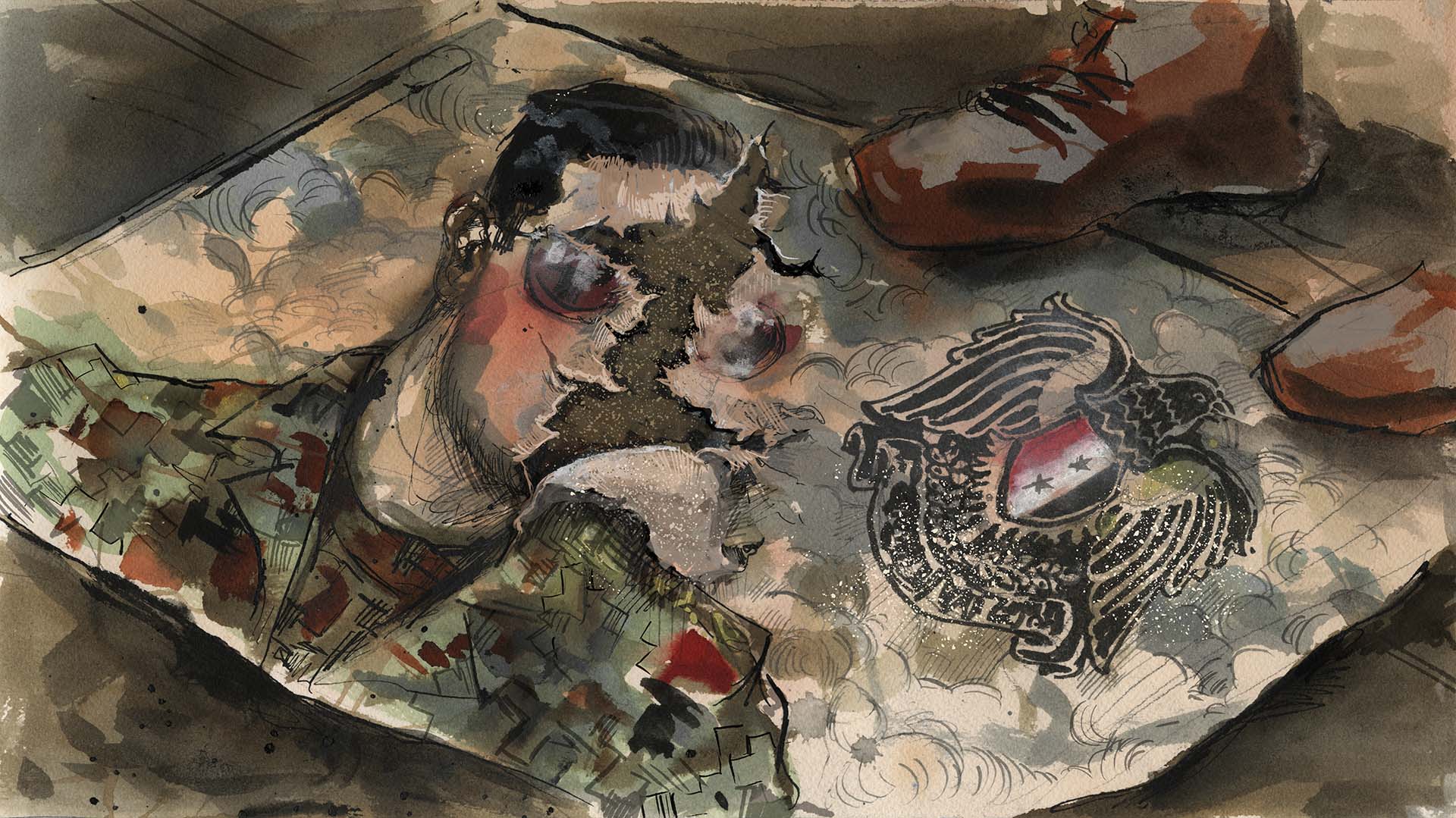
Journalists from around the world have joined forces to uncover harrowing new details about one of the most brutal state-run killing systems of the 21st century: the regime of former Syrian president Bashar Assad.
Drawing on a cache of classified Syrian intelligence records obtained by German broadcaster NDR and shared with the International Consortium of Investigative Journalists, the Damascus Dossier investigation exposes the inner workings of Assad’s security apparatus and its links to foreign governments and international organizations.
ICIJ, NDR and 24 media partners in 20 countries spent over eight months organizing and analyzing the documents, consulting experts and interviewing Syrian families still searching for loved ones who vanished under Assad’s rule.
The leak consists of more than 134,000 files, written primarily in Arabic — around 243 gigabytes of data. They span more than three decades, from the mid-90s through to December 2024, and originate from Syria’s Air Force Intelligence, the General Intelligence Directorate and other security services. These intelligence services faced wide-ranging sanctions in the United States and Europe for their brutality, which included torture and sexual violence.
The materials include internal memos, reports and communications revealing the daily operations of Assad’s surveillance and detention network, as well as its coordination with foreign allies, such as Russia and Iran, and its contacts with United Nations agencies working inside Syria. The highly sensitive dataset includes names of former Syrian intelligence personnel.
In addition, NDR obtained and shared with ICIJ and its partners over 70,000 files and photographs, including more than 33,000 chilling high-resolution photographs documenting the deaths of more than 10,200 Syrian prisoners primarily between 2015 and 2024.
Machinery of disappearance
The records illuminate a state policy of mass detention and execution. Under Assad’s rule, at least 160,000 Syrians were arrested and disappeared as the regime crushed dissent during the country’s civil war.
After Assad’s fall in December 2024, families searched prisons and morgues for signs of missing relatives — examining handwriting on cell walls, scouring mass graves, and comparing scraps of clothing — often without answers.
The Damascus Dossier exposes how Syrian officials reduced the value of human life to paperwork. Most death certificates signed by doctors at Harasta and Tishreen military hospitals, where torture victims were sent, listed “cardiorespiratory arrest” or “cardiac arrest” as the cause of death.
Each file represents a family left to wonder, a life erased and a system designed to conceal mass murder behind bureaucratic order. Using this dataset, Damascus Dossier partners provided evidence to families about the death of their relatives.
The cache of photos is the largest collection of images of Syrian prisoners ever obtained by journalists. Taken by military photographers, the images show detainees who perished in regime hospitals and prisons, their bodies numbered and catalogued with bureaucratic precision. Images of the prominent activist Mazen al-Hamada are among the photographs.
Until now, the Syrian public had no knowledge of these images.
A team of reporters from ICIJ, NDR and Süddeutsche Zeitung conducted an in-depth analysis of a sample of hundreds of the photographs. The analysis showed that the majority of victims bore signs of starvation and signs of physical harm. Many of them were naked. The Damascus Dossier images show that after each one died, prisoners were transported, photographed and catalogued. In most cases a detainee number was written on a white card placed on the body, written in marker on an arm, leg, torso or forehead, or superimposed on the photo. A military photographer, wearing rubber boots or disposable surgical covers on his feet, snapped photos of the body from multiple angles and then filed the images in meticulously organized digital folders.
During the course of the investigation, the Damascus Dossier team learned that the photographs referenced were independently shared with German authorities, who have led efforts to prosecute former members of the Assad regime. They are also now in the possession of the Syrian Center for Legal Studies and Research, a German NGO documenting human rights violations.
ICIJ and NDR extracted the names and NDR shared the information with three other entities to help families identify missing relatives: the United Nations’ Independent Institution on Missing Persons in Syria; the Syrian Network for Human Rights; and Ta’afi, an initiative supporting survivors of detention and torture.
U.N. money
The documents also show how the Assad regime benefited from relationships with United Nations agencies meant to provide aid for Syrian civilians.
During the war, the agencies paid at least $11 million to a Syrian private security company tasked with protecting U.N. offices — a company now revealed to be owned and controlled by Assad’s intelligence services.
Despite warnings from human rights organizations in 2022 about the company’s reported ties to the regime, the contracts continued for two more years, funneling millions to the very forces accused of torturing and killing Syrians.
One memo uncovered by the Damascus Dossier, from then-Foreign Minister Faisal Mekdad, shows that the Assad regime expected the employees of Syrian security firms to monitor U.N. personnel on behalf of Syrian intelligence.
The Damascus Dossier exposes the architecture of the Assad regime’s torture chambers in grim detail. It provides new evidence of how Assad’s security institutions operated as a unified killing machine — and how international indifference, flawed aid systems and money flows helped sustain it.
The Damascus Dossier investigation is brought to you by:
The ICIJ team
Director: Gerard Ryle
Managing editor: Fergus Shiel
Deputy managing editor: Annys Shin
Senior editors: Whitney Joiner, David Rowell, Dean Starkman
Reporters: David Kenner, Nicole Sadek, Roy W. Howard Fellow Sam Ellefson, Scilla Alecci
Head of data and research: Delphine Reuter
Deputy head of data and research: Karrie Kehoe
Data and research team: Denise Ajiri, Agustin Armendariz, Jelena Cosic, Jesús Escudero, Miguel Fiandor Gutiérrez
Fact checkers: Kathleen Cahill, Brenda Medina
Copy editor: Angie Wu
Head of digital and product: Hamish Boland-Rudder
Digital editor: Joanna Robin
Digital producer: Carmen Molina Acosta
Web developer: Antonio Cucho Gamboa
Social media producer: Daniela Vivas Labrador
Video producers: Scilla Alecci, Carmen Molina Acosta
Illustration: Molly Crabapple
Logo design: Ben King
Training manager: Jelena Cosic
Chief technology officer: Pierre Romera Zhang
Deputy chief technology officer: Caroline Desprat
Technology team: Soline Ledésert, Bruno Thomas, Maxime Vanza Lutonda, Whitney Awanayah, Javier Ladrón de Guevara, Jorge González, Carolina Verónica López Cotán, Clément Doumouro, Marie Gillier
The investigation team
- Gerard Ryle (ICIJ) Australia
- Hamish Boland-Rudder (ICIJ) Australia
- Jakob Weichenberger (ORF) Austria
- Martin Thür (ORF) Austria
- Miriam Beller (ORF) Austria
- Ulla Kramar-Schmid (ORF) Austria
- Stefan Melichar (profil) Austria
- Lars Bové (De Tijd) Belgium
- Delphine Reuter (ICIJ) Belgium
- Kristof Clerix (Knack) Belgium
- Pauline Hofmann (Le Soir) Belgium
- Frédéric Zalac (CBC/Radio-Canada) Canada
- Jason Ho (CBC/Radio-Canada) Canada
- Margaret Evans (CBC/Radio-Canada) Canada
- David Bruser (The Toronto Star) Canada
- Ghada Alsharif (The Toronto Star) Canada
- Jesse McLean (The Toronto Star) Canada
- Shree Paradkar (The Toronto Star) Canada
- Ahmed Ashour (ARIJ) Egypt
- Anna Karismo (Yle) Finland
- Juha Rissanen (Yle) Finland
- Jukka Koski (Yle) Finland
- Katariina Luoma (Yle) Finland
- Sakari Nuuttila (Yle) Finland
- Terhi Liimu (Yle) Finland
- Bruno Thomas (ICIJ) France
- Caroline Desprat (ICIJ) France
- Clément Doumouro (ICIJ) France
- Dean Starkman (ICIJ) France
- Marie Gillier (ICIJ) France
- Maxime Vanza Lutonda (ICIJ) France
- Pierre Romera Zhang (ICIJ) France
- Soline Ledésert (ICIJ) France
- Alexandre Horn (Le Monde) France
- Anne Michel (Le Monde) France
- Asia Balluffier (Le Monde) France
- Wael Qarssifi (SIRAJ) France
- Amir Musawy (Norddeutscher Rundfunk) Germany
- Anette Kammerer (Norddeutscher Rundfunk) Germany
- Antonius Kempmann (Norddeutscher Rundfunk) Germany
- Benedikt Strunz (Norddeutscher Rundfunk) Germany
- Harrison Taylor (Norddeutscher Rundfunk) Germany
- Luka Simon (Norddeutscher Rundfunk) Germany
- Sebastian Pittelkow (Norddeutscher Rundfunk) Germany
- Stella Peters (Norddeutscher Rundfunk) Germany
- Sulaiman Tadmory (Norddeutscher Rundfunk) Germany
- Volkmar Kabisch (Norddeutscher Rundfunk) Germany
- Ali Al Ibrahim (SIRAJ) Germany
- Benedikt Heubl (Süddeutsche Zeitung) Germany
- Felix Hunger (Süddeutsche Zeitung) Germany
- Hannah El-Hitami (Süddeutsche Zeitung) Germany
- Lea Weinmann (Süddeutsche Zeitung) Germany
- Lena Kampf (Süddeutsche Zeitung) Germany
- Lina Verschwele (Süddeutsche Zeitung) Germany
- Mauritius Much (Süddeutsche Zeitung) Germany
- Nadja Tausche (Süddeutsche Zeitung) Germany
- Niklas Keller (Süddeutsche Zeitung) Germany
- Ralf Wiegand (Süddeutsche Zeitung) Germany
- Petra Blum (Westdeutscher Rundfunk) Germany
- Karrie Kehoe (ICIJ) Ireland
- Sally Hayden (Irish Times) Ireland
- Scilla Alecci (ICIJ) Italy
- Gloria Riva (L’Espresso) Italy
- Leo Sisti (L’Espresso) Italy
- Paolo Biondani (L’Espresso) Italy
- Munir Khatib (ARIJ) Lebanon
- Hala Nasreddine (Daraj) Lebanon
- Hazem El-Amin (Daraj) Lebanon
- Jana Barakat (Daraj) Lebanon
- Carli Kooijman (Pointer (KRO-NCRV)) Netherlands
- Joris Heijkant (Pointer (KRO-NCRV)) Netherlands
- Lisette van Vliet (Pointer (KRO-NCRV)) Netherlands
- Peter Keizer (Pointer (KRO-NCRV)) Netherlands
- Robbert ter Weijden (Pointer (KRO-NCRV)) Netherlands
- Thomas Mulder (Pointer (KRO-NCRV)) Netherlands
- Mawada Kallas (SIRAJ) Netherlands
- Amund Bakke Foss (VG) Norway
- Eiliv Flich Flydal (VG) Norway
- Kyrre Lien (VG) Norway
- Ola Haram (VG) Norway
- Jelena Cosic (ICIJ) Serbia
- Andrés Mourenza (El País) Spain
- Daniele Grasso (El País) Spain
- Carolina Verónica López Cotán (ICIJ) Spain
- Javier Ladrón de Guevara (ICIJ) Spain
- Jesús Escudero (ICIJ) Spain
- Miguel Fiandor Gutiérrez (ICIJ) Spain
- Joaquín Castellon (LaSexta) Spain
- Adrián Blanco Ramos (Washington Post) Spain
- Ahmad Haj Hamdo (SIRAJ) Sweden
- Ali Fegan (SVT) Sweden
- Joachim Dyfvermark (SVT) Sweden
- Katia Wagner (SVT) Sweden
- Ola Westerberg (Utrikesmagasinet) Sweden
- Manar Rachwani (SIRAJ) Syria
- Mohammad Bassiki (SIRAJ) Syria
- Zakaria Zakaria (Washington Post) Syria
- Anthony Loyd (Times of London) UK
- Emma Yeomans (Times of London) UK
- Agustin Armendariz (ICIJ) USA
- Angie Wu (ICIJ) USA
- Annys Shin (ICIJ) USA
- Antonio Cucho (ICIJ) USA
- Carmen Molina Acosta (ICIJ) USA
- Daniela Vivas Labrador (ICIJ) USA
- David Kenner (ICIJ) USA
- David Rowell (ICIJ) USA
- Denise Ajiri (ICIJ) USA
- Fergus Shiel (ICIJ) USA
- Joanna Robin (ICIJ) USA
- Kathleen Cahill (ICIJ) USA
- Nicole Sadek (ICIJ) USA
- Richard H.P. Sia (ICIJ) USA
- Tom Stites (ICIJ) USA
- Whitney Awanayah (ICIJ) USA
- Whitney Joiner (ICIJ) USA
- Alan Sipress (Washington Post) USA
- Álvaro Valiño (Washington Post) USA
- Artur Galocha (Washington Post) USA
- Emily Wright (Washington Post) USA
- Joe Moore (Washington Post) USA
- Kareem Fahim (Washington Post) USA
- Olivier Laurent (Washington Post) USA
- Reem Akkad (Washington Post) USA
- Virginia Singarayar (Washington Post) USA
- Mohammed Komani (ARIJ) Yemen
Source link
